

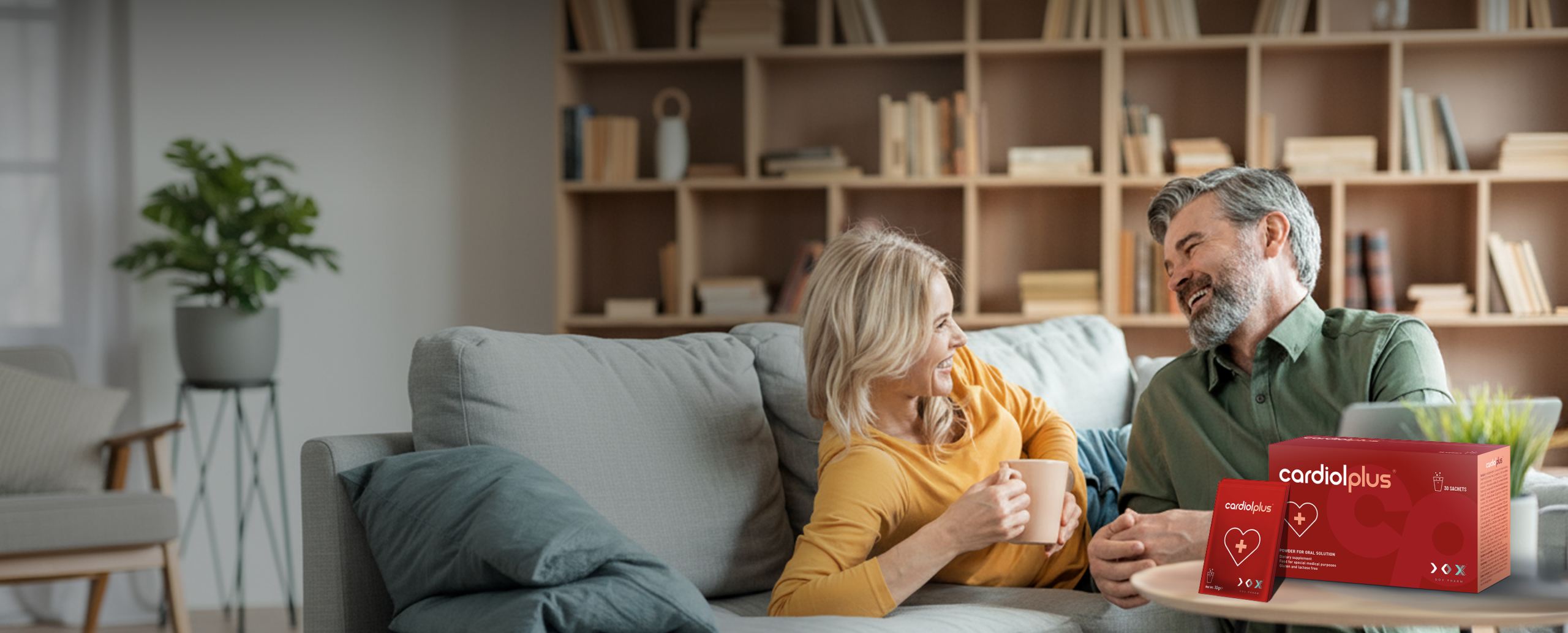
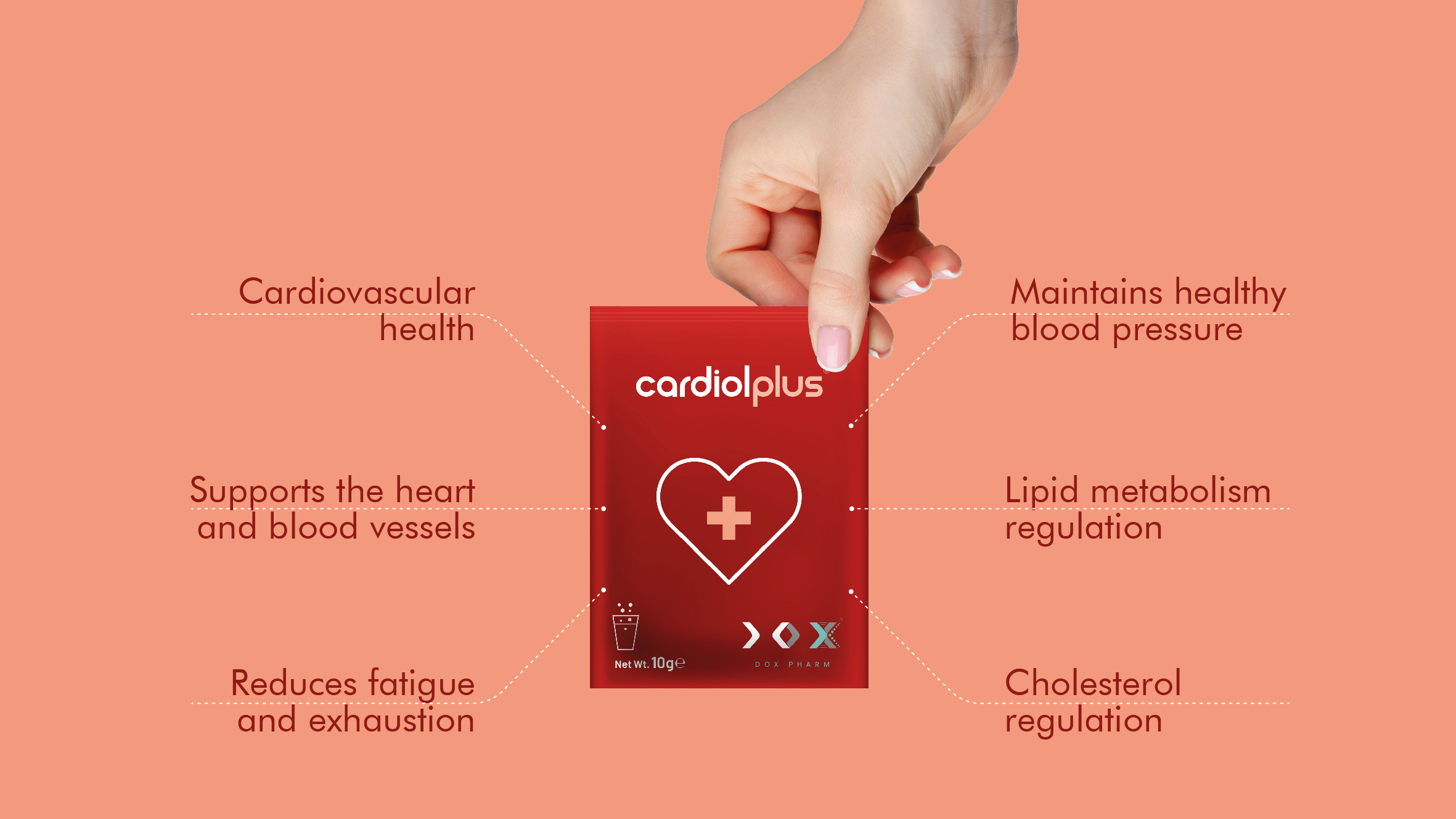
Just one CardiolPlus® sachet per day provides complete support — from normal heart and cardiac muscle function, through cholesterol and blood pressure regulation, to the reduction of fatigue and exhaustion.
1 sachet per day combines scientifically proven ingredients that may help to:



 Gluten and lactose-free
 No artificial colors
 100% vegan
 No preservatives
Gluten and lactose-free
No artificial colors
100% vegan
No preservatives
No preservatives
Gluten and lactose-free
No artificial colors
100% vegan
No preservatives
Just one CardiolPlus® sachet per day provides complete support — from normal heart and cardiac muscle function, through cholesterol and blood pressure regulation, to the reduction of fatigue and exhaustion.
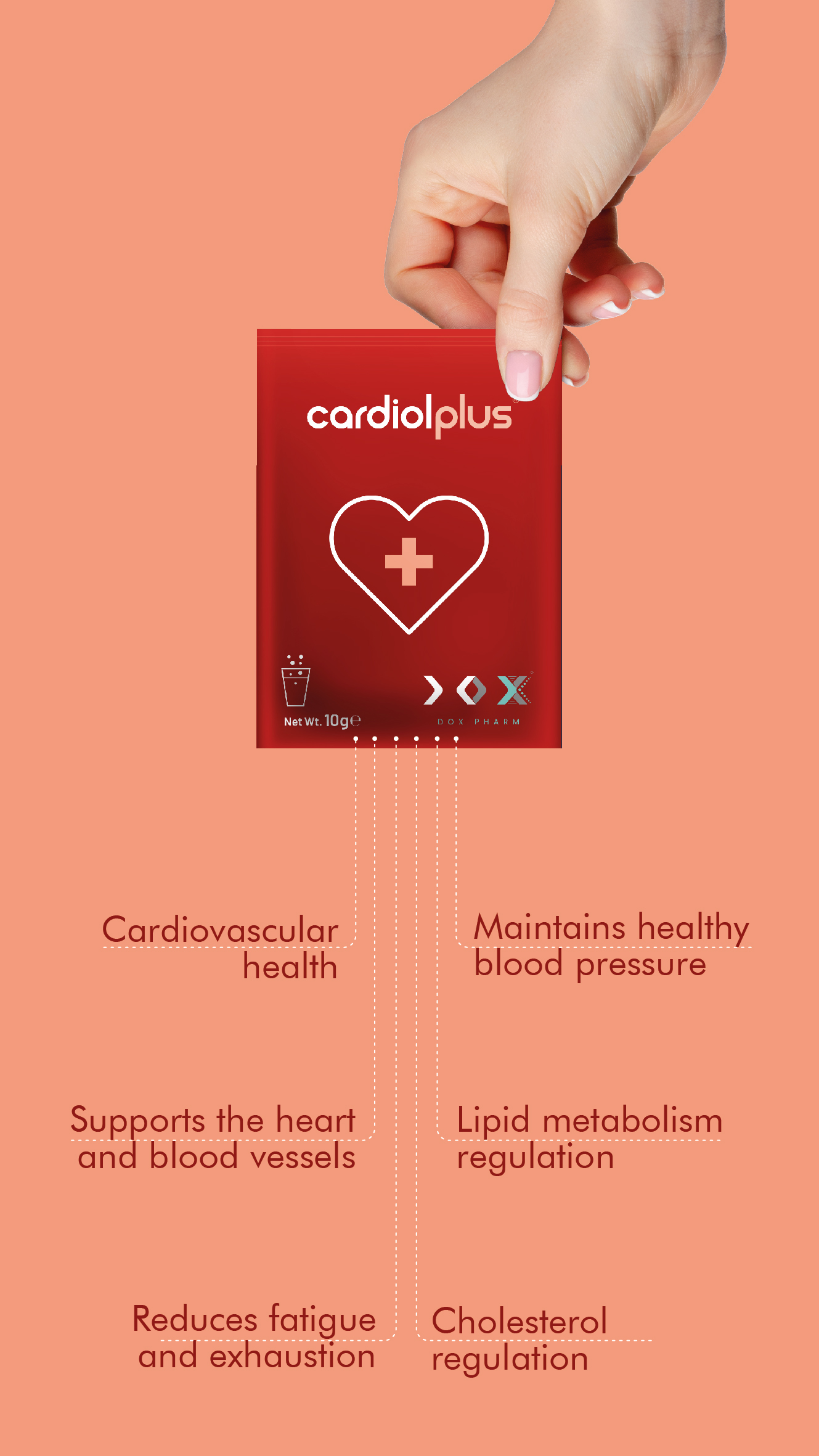
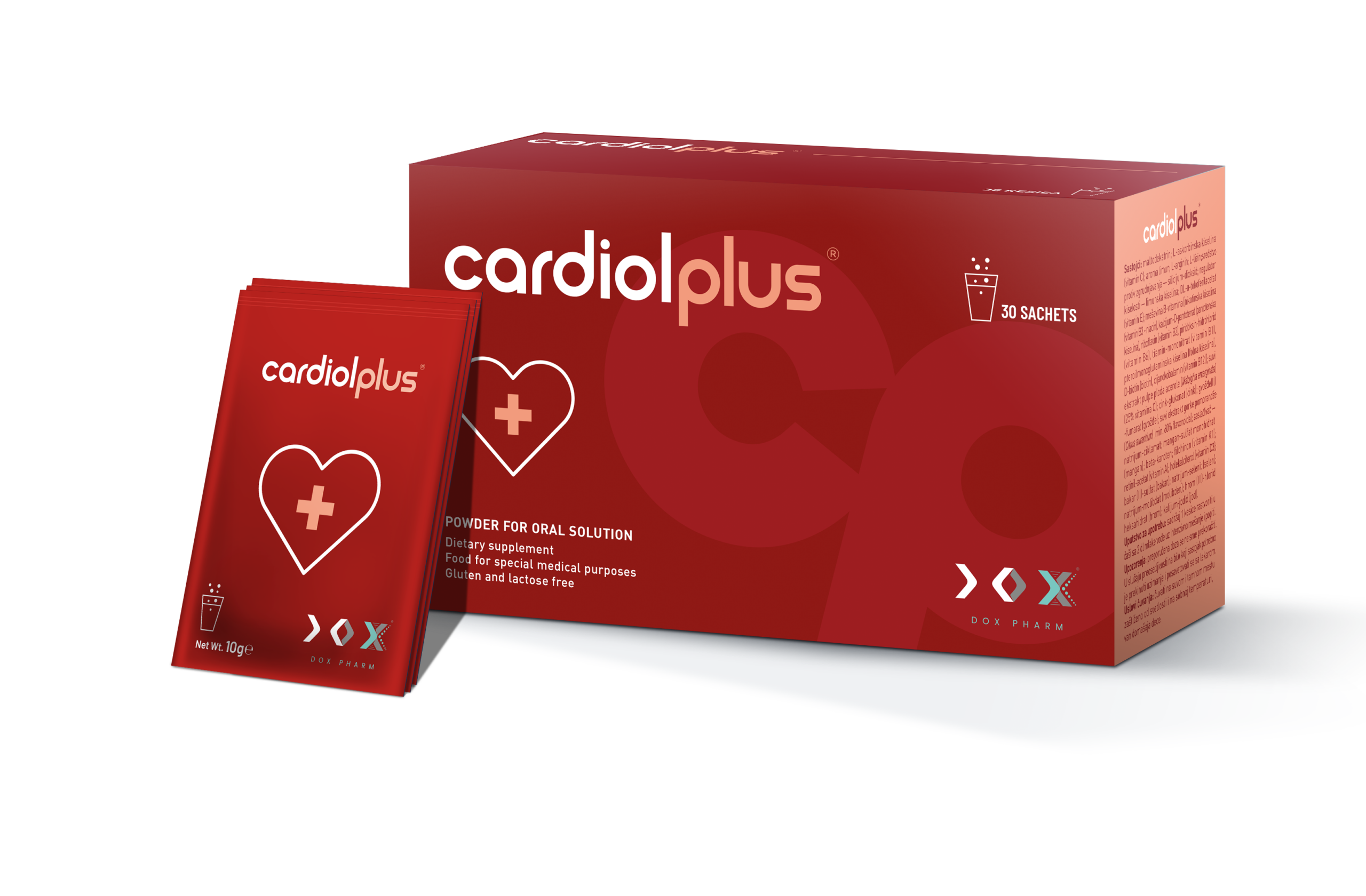
CardiolPlus® It is produced in modern manufacturing facilities, in accordance with applicable regulations, GMP standards, and HACCP principles, which guarantee safety and efficacy.
No compromise on taste or efficacy.
It is recommended to use one sachet daily for a period of at least 8 weeks. Dissolve the sachet in a glass of water and drink it, preferably with a main meal.
High blood pressure is a risk factor for heart attack and stroke. Epidemiological data show that reducing systolic blood pressure by just 2 mmHg reduces the risk of stroke by 10%. CardiolPlus can be taken alone or as an addition to standard antihypertensive therapy because, by acting through different mechanisms, it provides complementary benefits for patients with high blood pressure.
Policosanol contributes to maintaining normal blood cholesterol levels by reducing total and LDL cholesterol (bad cholesterol) while increasing HDL cholesterol (good cholesterol).
A clinical study conducted on 589 patients with hypertension and type II hypercholesterolemia showed that a daily dose of 5 mg of policosanol reduced LDL cholesterol by 20.5%, total cholesterol by 15.4%, and increased HDL cholesterol by 12.7%. (Castano G., Mas R., Fernandez JC., Fernandez J., Illnait J., Lopez E. Effects of policosanol on older patients with hypertension and type II hypercholesterolaemia. Drugs R D 2002;3(3):159–72.)
In a comparative, randomized, double-blind clinical study, the efficacy and tolerability of policosanol (10 mg/day) and lovastatin (20 mg/day) were compared. The study was conducted on 53 patients over a 12-week period. The results showed that policosanol reduced LDL cholesterol by 20.4%, total cholesterol by 14.2%, and the LDL/HDL cholesterol ratio by 23.7%, while lovastatin reduced LDL cholesterol by 16.8%, total cholesterol by 14.0%, and the LDL/HDL cholesterol ratio by 14.9%. Compared to lovastatin, policosanol increased HDL cholesterol by 7.5%. No change in triglyceride levels was observed after therapy with either policosanol or lovastatin. It was also found that policosanol did not affect levels of aspartate aminotransferase, creatine phosphokinase, or alkaline phosphatase, which is important for the safety of its use. (Crespo N., Illnait J., Mas R., Fernandez L., Fernandez J., Castano G. Comparative study of the efficacy and tolerability of policosanol and lovastatin in patients with hypercholesterolemia and noninsulin dependent diabetes mellitus. Int J Clin Pharmacol Res 1999;19(4):117–27.)
In a study comparing the efficacy and safety of 20 mg and 40 mg of policosanol per day, it was shown that there was no significant difference between these two doses in terms of efficacy and safety. Therefore, 20 mg of policosanol, as contained in CardiolPlus, is sufficient to achieve the positive effects of the product. (Castano G., Mas R., Fernandez L., Illnait J., Gamez R., Alvarez E. Effects of policosanol 20 versus 40 mg/day in the treatment of patients with type II hypercholesterolemia: a 6-month double-blind study. Int J Clin Pharm Res XXI(1):43–57 (2001).)
Yes, because it does not contain added sugar, it is considered safe for use by people with diabetes.
Policosanol lowers bad LDL cholesterol and increases good HDL cholesterol, so it can be used alone or as an addition to statin therapy, especially if target values have not been achieved or if a lower statin dose is desired. Since policosanol may also have a mild antiplatelet effect, additional caution and consultation with a physician are required if aspirin, clopidogrel, or anticoagulants are used. The recommended dose is 20 mg per day, as contained in CardiolPlus.
Nattokinase from CardiolPlus helps in the prevention of high blood pressure. It can be used alone or as an addition to standard antihypertensive therapy because, by acting through different mechanisms, it provides complementary benefits for patients with high blood pressure.
It is recommended to use one sachet daily for a period of at least 8 weeks. Dissolve the sachet in a glass of water and drink it, preferably with a main meal.
High blood pressure is a risk factor for heart attack and stroke. Epidemiological data show that reducing systolic blood pressure by just 2 mmHg reduces the risk of stroke by 10%. CardiolPlus can be taken alone or as an addition to standard antihypertensive therapy because, by acting through different mechanisms, it provides complementary benefits for patients with high blood pressure.
Policosanol contributes to maintaining normal blood cholesterol levels by reducing total and LDL cholesterol (bad cholesterol) while increasing HDL cholesterol (good cholesterol).
A clinical study conducted on 589 patients with hypertension and type II hypercholesterolemia showed that a daily dose of 5 mg of policosanol reduced LDL cholesterol by 20.5%, total cholesterol by 15.4%, and increased HDL cholesterol by 12.7%. (Castano G., Mas R., Fernandez JC., Fernandez J., Illnait J., Lopez E. Effects of policosanol on older patients with hypertension and type II hypercholesterolaemia. Drugs R D 2002;3(3):159–72.)
In a comparative, randomized, double-blind clinical study, the efficacy and tolerability of policosanol (10 mg/day) and lovastatin (20 mg/day) were compared. The study was conducted on 53 patients over a 12-week period. The results showed that policosanol reduced LDL cholesterol by 20.4%, total cholesterol by 14.2%, and the LDL/HDL cholesterol ratio by 23.7%, while lovastatin reduced LDL cholesterol by 16.8%, total cholesterol by 14.0%, and the LDL/HDL cholesterol ratio by 14.9%. Compared to lovastatin, policosanol increased HDL cholesterol by 7.5%. No change in triglyceride levels was observed after therapy with either policosanol or lovastatin. It was also found that policosanol did not affect levels of aspartate aminotransferase, creatine phosphokinase, or alkaline phosphatase, which is important for the safety of its use. (Crespo N., Illnait J., Mas R., Fernandez L., Fernandez J., Castano G. Comparative study of the efficacy and tolerability of policosanol and lovastatin in patients with hypercholesterolemia and noninsulin dependent diabetes mellitus. Int J Clin Pharmacol Res 1999;19(4):117–27.)
In a study comparing the efficacy and safety of 20 mg and 40 mg of policosanol per day, it was shown that there was no significant difference between these two doses in terms of efficacy and safety. Therefore, 20 mg of policosanol, as contained in CardiolPlus, is sufficient to achieve the positive effects of the product. (Castano G., Mas R., Fernandez L., Illnait J., Gamez R., Alvarez E. Effects of policosanol 20 versus 40 mg/day in the treatment of patients with type II hypercholesterolemia: a 6-month double-blind study. Int J Clin Pharm Res XXI(1):43–57 (2001).)
Yes, because it does not contain added sugar, it is considered safe for use by people with diabetes.
Policosanol lowers bad LDL cholesterol and increases good HDL cholesterol, so it can be used alone or as an addition to statin therapy, especially if target values have not been achieved or if a lower statin dose is desired. Since policosanol may also have a mild antiplatelet effect, additional caution and consultation with a physician are required if aspirin, clopidogrel, or anticoagulants are used. The recommended dose is 20 mg per day, as contained in CardiolPlus.
Nattokinase from CardiolPlus helps in the prevention of high blood pressure. It can be used alone or as an addition to standard antihypertensive therapy because, by acting through different mechanisms, it provides complementary benefits for patients with high blood pressure.